Live one-on-one ground instruction and in-depth checkride preparation, built around the ACS, led by FAA certificated instructors, and designed to make you a capable, decisive pilot in command.
“As pilot in command, you are responsible for yourself, your passengers, and the people below you. We help you understand how to be a confident, decisive pilot who leads every flight with precision and care.”
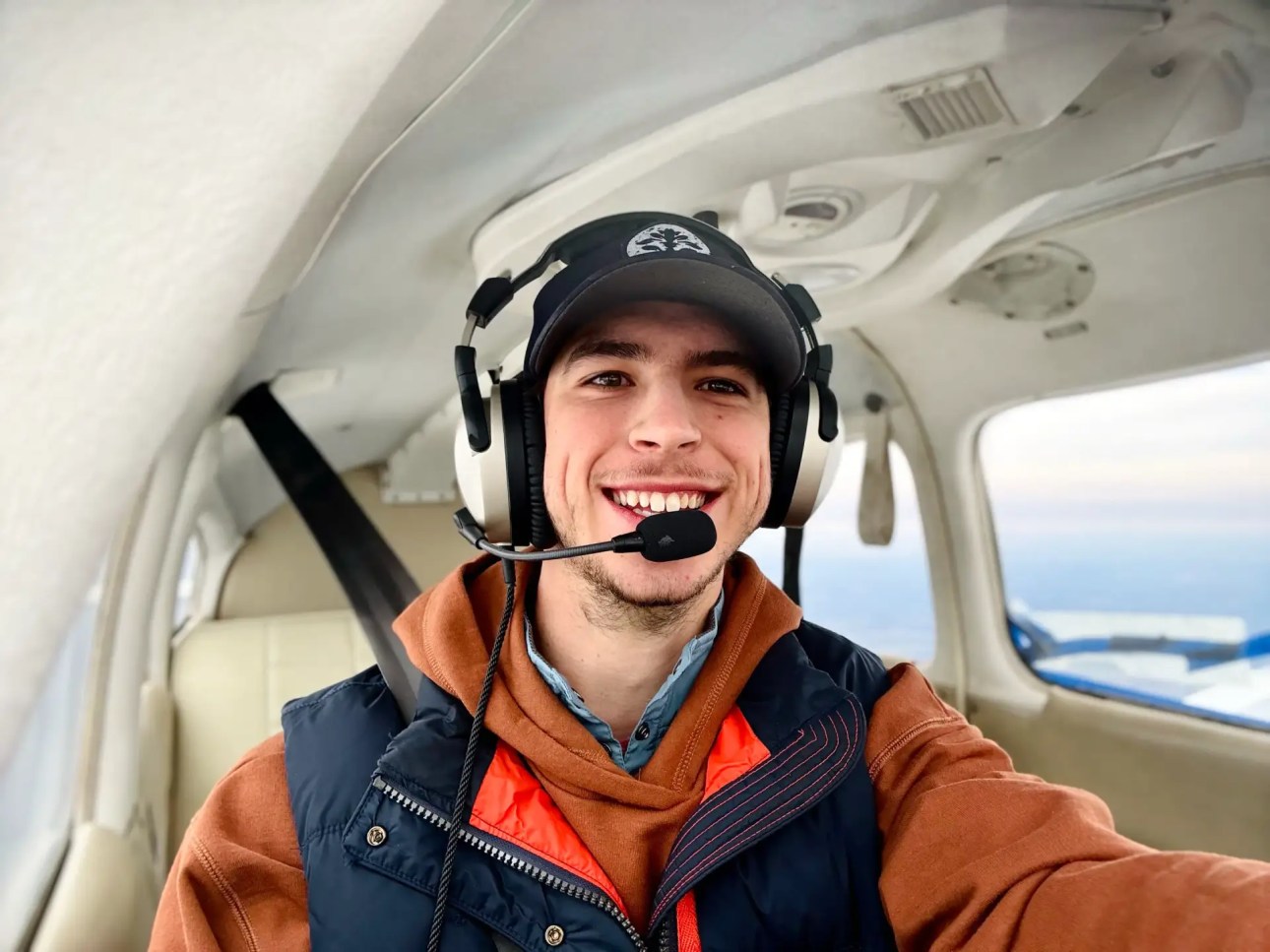
ELLIOT JORDAN · THE ROO PROJECT
OUR PROGRAMS
Two ways to sharpen your knowledge
Whether you need to fill a specific gap before your next flight or you’re prepping for a checkride, we have a structured path for you.
Live ground instruction
Work directly with an FAA CFI or CGI in a live session built around whatever you need. No rigid curriculum, no wasted time.
Schedule a session on any topic of your choosing
One-on-one with a certificated FAA CFI or CGI
Flexible pacing, go deep or cover the essentials
Ask real questions, get real explanations
Ideal for brushing up before a flight or review after training
Session summary provided after each lesson
Free 30-minute consultationNot sure where to start? We’ll sit down with you, learn your goals, and build the right plan. No commitment required.
Each lesson dives into a core knowledge area, walks through ACS risk elements, and prepares you to articulate your reasoning to a DPE. Select a category, then expand a topic to view the full lesson plan.
01Preflight PreparationPilot privileges & limitations, medical certifications, aircraft airworthiness, and mandatory inspection requirementsPA.I.A / PA.I.B1–3 hrs
Lesson objectives
Explain the privileges and limitations of a Private Pilot Certificate
Identify all pilot and aircraft documents required for legal flight (PSCRITT)
Understand types of medical certifications, durations, and FAA BasicMed
Determine airworthiness using MEL, KOEL, TCDS, and STC documentation
03Aircraft Performance & Weight and BalanceCG calculations, density altitude, and using POH performance charts for takeoff and landingPA.I.F.K1–K41–3 hrs
Lesson objectives
Define aircraft weight categories: BEW, gross weight, useful load, and max gross weight
Perform W&B calculations using arm, moment, datum, and CG
Explain pressure altitude vs. density altitude and calculate DA from given conditions
Describe how altitude, temperature, and humidity affect aircraft performance
Use POH performance charts for takeoff and landing distances
Session tasks
Weight & balance fundamentals and CG calculations
Altitude and air density (pressure altitude, density altitude, humidity)
Takeoff and landing performance charts
Scenario-based applications provided by the instructor
ACS Reference: PA.I.F.K1–K4 — Performance and Limitations.
01Pilot Qualifications & DocumentsIFR privileges, instrument currency (6HITS), safety pilot requirements, and IPCIR.I.A / IR.I.B1–3 hrs
Lesson objectives
Explain the privileges and limitations of private pilot and instrument ratings
Differentiate between airplane category, class, and type ratings
Describe medical certification and BasicMed requirements and limitations
Differentiate between currency and proficiency
Explain instrument currency (6HITS), safety pilot requirements, and IPC
Session tasks
Requirements for certification and documentation (IR.I.A.K1–K2)
Medical requirements: types, durations, BasicMed (IR.I.A.K4–K5)
Aircraft category, class, and type; high-performance and complex requirements
Proficiency vs. currency: recent flight experience (61.57), safety pilot (91.109)
Instrument Proficiency Check (IPC) and logging instrument time
ACS Reference: IR.I.A.K1–K5, IR.I.B.K1, IR.II.C.K1 — Pilot Qualifications. IFR certification, currency, medical requirements, and safety pilot operations.
08Emergency Procedures (IFR)Loss of comm in IMC/VMC, systems failures, partial panel, spatial disorientation, and compass errorsIR.III.A / IR.IV.B1–3 hrs
Lesson objectives
Identify appropriate actions for loss of comm in both IMC and VMC (91.185)
Explain procedures for vacuum, pitot-static, electrical, and navigational failures
Demonstrate knowledge of partial panel operations and instrument scan
Recognize spatial disorientation, vestibular illusions, and recovery methods
Identify and explain all magnetic compass errors
Session tasks
Loss of comm: VMC and IMC procedures (91.185), transponder codes, IFR altitudes
Aircraft systems failures: vacuum, pitot-static, electrical, navigational
Partial panel: recognition of failed instruments, control using remaining instruments
Spatial disorientation: causes, vestibular illusions, visual illusions, prevention and recovery
Compass errors: acceleration/deceleration, turning errors, magnetic dip, deviation
ADM: risk assessment, available resources, emergency checklists, automation use
ACS Reference: IR.III.A.K1–K3, IR.II.A.K1–K2, IR.II.B.K1, IR.IV.B.K1–K4 — Emergency Procedures. Loss of comm, systems failures, partial panel, and spatial disorientation for IFR operations.
Choose a service below and pick a time that works for you. Live, one-on-one instruction led by FAA certificated instructors.
PIC LEADERSHIP
More than a knowledge test
Passing a checkride means demonstrating judgment, not just memorizing regulations. We train you to think and lead like a pilot in command from day one.
🧭 Decision-making under pressure
Real scenario work that forces you to reason through competing priorities (fuel, weather, passengers, ATC) and make sound calls in real time.
🛡️ Risk management first
Every lesson integrates the PAVE checklist and 5P model so risk assessment becomes instinctive, not an afterthought before departure.
🗣️ Communication & CRM
You’re responsible for everyone on board. We develop the habit of briefing passengers, managing cabin distractions, and staying ahead of the aircraft.
TRAINING STAFF
Who you’ll learn from
Every TRP instructor is FAA certificated and brings real-world aviation experience into every session, not just textbook knowledge.
CEO & LEAD INSTRUCTOR
Elliot Jordan
Elliot is an Air Traffic Controller, FAA Safety Team Representative, and Certified Advanced Ground Instructor, Instrument with deep expertise in aviation safety and instructing pilots to become leaders in the flight deck.
TRP CERTIFICATE
Complete all lessons. Earn your FAA Knowledge Test Endorsement.
Each lesson can be taken individually to target a specific gap. Complete the full checkride prep series and The Roo Project will issue you a certificate of completion with a FAA endorsement to take your written exam.